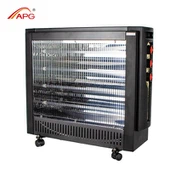
At six in the morning, when the first ray of sunlight swept across the factory area, trucks loaded with containers had already lined up outside the warehouse. In the workshop, workers were moving the last box of CS16 electric heaters onto the conveyor belt. The warehouse aisles were stacked so that only one person could pass through - the best-selling models of heating equipment such as 3000A, 8000D, and 2000S had occupied every inch of space, and the air was filled with the smell of carton ink and metal parts.
Full warehouse, early trucks
"This has been the norm for the past three months." Logistics supervisor Lao Zhang wiped his sweat and watched another 17-meter-long container slowly fall into the loading and unloading area. With the early start of the winter purchasing season in the northern hemisphere, electric heaters and gas heaters have become the main force of shipments. The production line runs day and night, but it still can't keep up with the speed of overseas orders.
Wisdom of the season: racing against time
"When consumers wrap themselves in scarves, our products should have been waiting on the shelves." Supply chain director Chen Min pointed to the world map on the wall and explained. From the assembly of parts to the arrival of a heater in European and American supermarkets, it takes two months: a 40-day production cycle, 30 days of transoceanic transportation, and time for channel distribution. It is this reverence for the season that makes global buyers send orders in snowflakes in the scorching sun of July.
Warm call
Faced with the continued increase in order volume, the production schedule has been arranged until late autumn. Production manager stroked the red shell of the 2000S model that had just come off the production line, turned to the camera and said solemnly: "If you need this winter protection, please contact us now. Fighting for one more day can make warmth reach the corners of the world one day earlier."