

Hey there! As a small fan supplier, I often get asked about how much air a small fan can move. It's a pretty common question, and it's actually quite important to understand, whether you're looking to cool down a small space or just want to know what you're getting when you buy a small fan.
First off, let's talk about what determines how much air a small fan can move. There are a few key factors here. The size of the fan blades is a big one. Generally, larger blades can move more air because they have a bigger surface area to push the air around. But it's not just about the size; the shape and pitch of the blades also matter. Blades with a steeper pitch can move air more efficiently, kind of like how a screw moves through wood more easily when it has a steeper thread.
Another factor is the speed of the motor. A more powerful motor can spin the blades faster, which in turn moves more air. But there's a balance here, because a really fast - spinning fan might also be noisier. And of course, the design of the fan housing can affect air movement too. A well - designed housing can direct the air flow more effectively, making the fan seem more powerful even if it's moving the same amount of air as a fan with a less efficient housing.
Now, let's get into some numbers. Small fans can vary widely in terms of how much air they can move. The measurement we usually use for this is cubic feet per minute (CFM). A very small, basic handheld fan might move around 10 - 20 CFM. These are the kind of fans you might use to cool yourself down on a hot day when you're out and about. They're not going to cool down a whole room, but they're great for personal use.
For example, our Portable Handheld Small Fan is designed to be super portable and convenient. It might not have the highest CFM out there, but it's perfect for keeping you cool when you're walking around, at the beach, or in a crowded place.
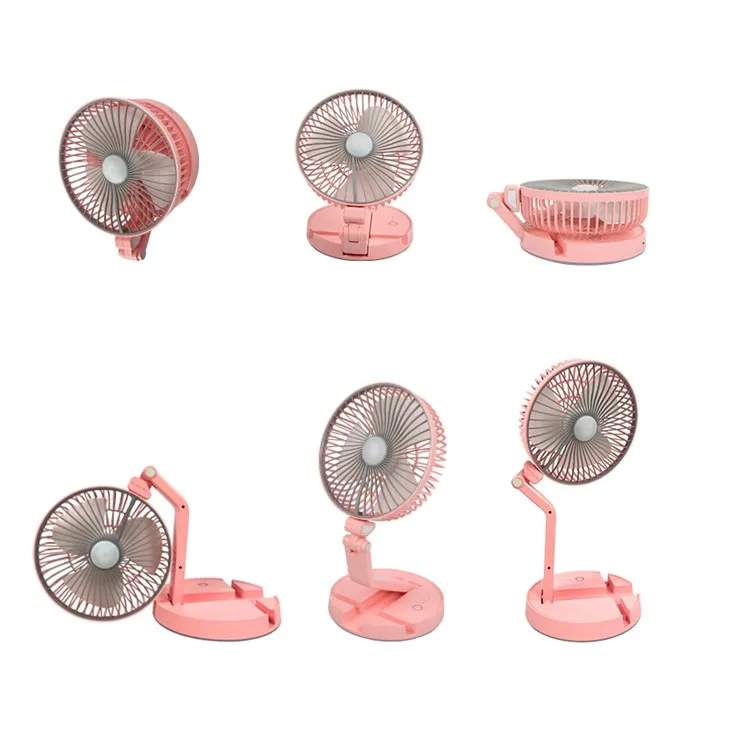
If you're looking to cool a small desk area, a desktop fan can be a great choice. These fans typically move around 30 - 60 CFM. They're usually a bit larger than handheld fans and have a more stable base. Our Desktop Foldable Small Fan is a great option. It's foldable, so you can adjust it to the perfect angle, and it moves enough air to keep you comfortable while you're working at your desk.
Then there are the more advanced small fans, like our Dual Heads Smart Small Fan. This fan has two heads, which means it can cover a wider area and move more air. It can move anywhere from 60 - 100 CFM or even more, depending on the settings. The dual - head design allows it to cool a small room or a larger desk area more effectively.
But CFM isn't the only thing to consider when choosing a small fan. You also want to think about noise level. Some fans can be really noisy, especially when they're running at high speeds. We've worked hard to design our fans to be as quiet as possible while still moving a good amount of air.
Another thing is energy efficiency. Small fans are generally pretty energy - efficient, but some are better than others. Our fans are designed to use as little energy as possible, which means you can keep them running for longer without worrying about your electricity bill.
So, how can you tell if a small fan is right for you? Well, first, think about where you're going to use it. If it's just for personal use, a handheld fan might be all you need. If you want to cool a small workspace, a desktop fan is a good bet. And if you need to cool a small room, a dual - head fan or a more powerful desktop fan could be the way to go.
Also, take a look at the reviews. Reading what other customers have to say can give you a good idea of how well a fan works in real - life situations. You can find lots of reviews on our website, and we're always happy to answer any questions you might have.
If you're in the market for a small fan, we've got a great selection to choose from. Whether you need a portable fan for on - the - go cooling or a more powerful fan for a small room, we've got you covered. And if you're a business looking to purchase in bulk, we offer great deals and can work with you to find the best solution for your needs.
So, if you're interested in our small fans, don't hesitate to reach out. We're here to help you find the perfect fan for your situation. Whether you're an individual looking for a little extra coolness or a business in need of multiple fans, we're ready to talk. Let's start a conversation about how our small fans can meet your air - moving needs!
References
- Fan Performance Testing Standards: American Society of Heating, Refrigerating and Air - Conditioning Engineers (ASHRAE)
- Principles of Fan Design and Air Movement: Fan Manufacturers Association Publications