

Hey there! As a gas heater supplier, I've been getting a ton of questions lately about the difference between forced - air and radiant gas heaters. So, I thought I'd break it down for you all in this blog post.
Let's start with forced - air gas heaters. These bad boys work by heating the air. A burner in the heater warms up the air, and then a fan blows that heated air through a system of ducts and vents, distributing it throughout the space. It's kind of like a super - powered blow - dryer on a large scale.
One of the biggest advantages of forced - air gas heaters is their speed. They can heat up a room pretty quickly. If you're coming into a cold house on a winter day, you can turn on the forced - air heater, and within minutes, you'll start feeling the warmth. They're also great for large spaces. Since the fan can push the heated air far and wide, it can effectively heat a big living room, a warehouse, or an office building.
Another plus is that forced - air systems can be used for air circulation. Many of these heaters are also part of a central heating and cooling system. In the summer, they can be reversed to blow cool air, acting as an air conditioner. This dual functionality can save you money in the long run because you don't have to buy separate heating and cooling units.
However, forced - air gas heaters aren't perfect. One of the drawbacks is that they can be a bit noisy. The fan that blows the air can create a humming or whooshing sound, which might be annoying if you're trying to have a quiet conversation or take a nap. Also, these heaters can dry out the air. As the air is heated and circulated, the moisture in it can be reduced, leading to dry skin, irritated eyes, and a stuffy nose.
Now, let's talk about radiant gas heaters. These heaters work in a different way. Instead of heating the air, they emit infrared radiation. This radiation travels through the air and heats up objects and people in its path. It's similar to how you feel the warmth of the sun on your skin even though the air around you might still be cool.
The main advantage of radiant gas heaters is their efficiency. Since they heat objects directly, they don't waste energy heating the air that might just escape through an open window or a crack in the wall. This makes them great for spot heating. If you're sitting at a desk in a large room, you can place a radiant heater near you, and it will keep you warm without having to heat the entire room.
Radiant heaters are also very quiet. There's no fan blowing air, so you won't have to deal with any annoying noise. This makes them ideal for bedrooms, libraries, or any place where silence is golden.
Moreover, radiant gas heaters don't dry out the air. Since they don't rely on heating the air, they don't remove moisture from it. This means you can enjoy a warm and comfortable environment without the negative effects of dry air.
But radiant gas heaters also have their limitations. They have a limited range. Unlike forced - air heaters that can distribute heat throughout a large space, radiant heaters only heat the area in front of them. So, if you want to heat a whole room, you might need multiple heaters.
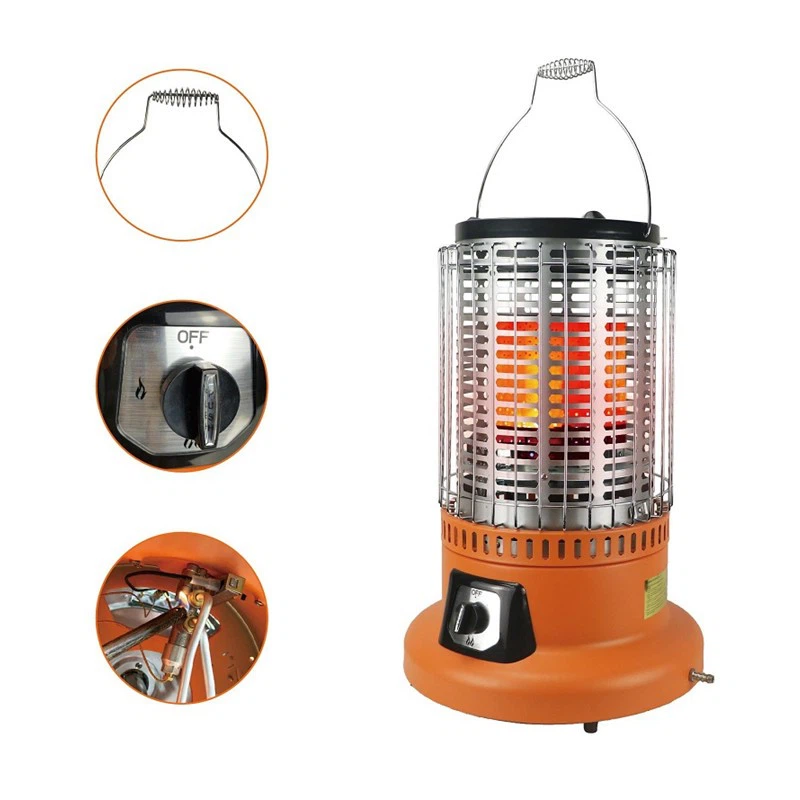
Also, radiant heaters take a bit longer to heat up a large area. If you're looking to quickly warm up a big space, a forced - air heater might be a better choice.
So, which one should you choose? Well, it depends on your needs. If you have a large space that you need to heat quickly and you don't mind a bit of noise and dry air, a forced - air gas heater might be the way to go. On the other hand, if you're looking for an efficient, quiet, and moisture - friendly way to heat a small area or just yourself, a radiant gas heater is a great option.
As a gas heater supplier, I offer a wide range of both forced - air and radiant gas heaters. For those who need a high - power option, check out our High Power Gas Heater. It's a beast when it comes to heating large spaces quickly. If you're on the go and need a portable option, our 2500W Portable Kerosene Heater is a great choice. And if you're into outdoor activities, don't forget to check out our Double Burner Portable Camping Grill for those cozy camping trips.
If you're still not sure which type of heater is right for you, or if you have any questions about our products, feel free to reach out. We're here to help you make the best decision for your heating needs. Whether you're a homeowner, a business owner, or an outdoor enthusiast, we've got the perfect gas heater for you. Let's have a chat and figure out the best solution together.
In conclusion, both forced - air and radiant gas heaters have their pros and cons. By understanding how they work and what they can offer, you can make an informed decision and choose the heater that suits your lifestyle and budget. So, don't wait any longer. Contact us today and let's get you the perfect gas heater for a warm and comfortable winter!
References
- "Heating Systems 101: Forced - Air vs. Radiant". Home Heating Magazine.
- "The Science of Radiant and Forced - Air Heating". Energy Efficiency Journal.