

Hey there! As a supplier of wood burning stoves, I often get asked the question: "How much wood does a wood burning stove consume per day?" It's a crucial question, especially for those looking to heat their homes efficiently and economically. So, let's dive right in and break it down.
Factors Affecting Wood Consumption
First off, there's no one - size - fits - all answer to this question. A bunch of factors come into play when it comes to how much wood your stove will burn each day.
Stove Efficiency
The efficiency of your wood burning stove is a major factor. Modern, high - efficiency stoves are designed to burn wood more completely, extracting more heat from each piece of wood. This means they can produce the same amount of heat using less wood compared to older, less efficient models. For instance, an old - fashioned stove might only convert 50% of the wood's energy into heat, while a top - of - the - line modern stove can reach efficiencies of up to 80% or more. So, if you're using an inefficient stove, you're going to be burning through a lot more wood.
Size of the Space
The size of the area you're trying to heat matters big time. A small cabin or a single room will require far less wood than a large multi - room house. Think about it like this: a smaller space has less volume to heat, so your stove doesn't have to work as hard or burn as much wood to maintain a comfortable temperature. If you're heating a 500 - square - foot cabin, you'll use a lot less wood than if you're trying to warm a 3000 - square - foot home.
Outside Temperature
The outside temperature has a huge impact on wood consumption. On a bitterly cold winter day, your stove has to work overtime to keep the indoor temperature stable. In really cold weather, you might find yourself adding wood to the stove more frequently, and thus using more wood overall. Conversely, on a milder winter day, the stove won't have to work as hard, and you'll use less wood.
Desired Indoor Temperature
How warm you like your home also plays a role. If you're someone who likes it to be toasty warm, say around 75°F (24°C), your stove will need to burn more wood compared to someone who is comfortable at a cooler 65°F (18°C). It's all about finding that balance between comfort and wood consumption.
Calculating Wood Consumption
Now, let's talk about how you can estimate the wood consumption of your wood burning stove.
BTU (British Thermal Unit) Rating
The BTU rating of your stove is a key piece of information. The BTU rating tells you how much heat the stove can produce per hour. A higher BTU rating means the stove can produce more heat, but it also might consume more wood. To estimate daily wood consumption, you first need to know the BTU output of your stove and the heat requirements of your space.
On average, a cord of wood (a stack of wood measuring 4 feet by 4 feet by 8 feet) contains about 20 million BTUs. Let's say your stove has a BTU output of 50,000 BTUs per hour, and you run it for 10 hours a day. That's 500,000 BTUs per day. To find out how much wood you'll use, you divide the total daily BTUs by the BTUs per cord. So, 500,000 divided by 20,000,000 is 0.025 cords per day.
Wood Type
Different types of wood have different energy densities. Hardwoods like oak, maple, and hickory are denser and have more energy per volume compared to softwoods like pine and fir. Hardwoods burn longer and hotter, so you'll need less of them to produce the same amount of heat. Softwoods, on the other hand, burn faster and might require you to add more wood to the stove more often.
Typical Wood Consumption Examples
Let's look at some real - world examples to give you a better idea of how much wood a wood burning stove might consume per day.
Small Cabin
For a small, well - insulated cabin of about 500 square feet, a moderately efficient wood burning stove might use around 1/4 to 1/2 cord of wood per month during the coldest months. That translates to roughly 0.008 to 0.016 cords per day. If you're using hardwoods, you might be closer to the lower end of that range, while softwoods could push you towards the higher end.
Medium - Sized Home
A medium - sized home of around 1500 square feet might use 1 to 2 cords of wood per month in the winter. That's about 0.033 to 0.066 cords per day. Again, this can vary depending on the factors we discussed earlier, like stove efficiency, outside temperature, and desired indoor temperature.

Large Home
A large, multi - story home of 3000 square feet or more could use 2 to 4 cords of wood per month. That's approximately 0.066 to 0.133 cords per day. Heating a large home with a wood burning stove can be quite wood - intensive, but it can also be a cost - effective and cozy way to heat if you manage it well.
Our Windproof Wood Stove
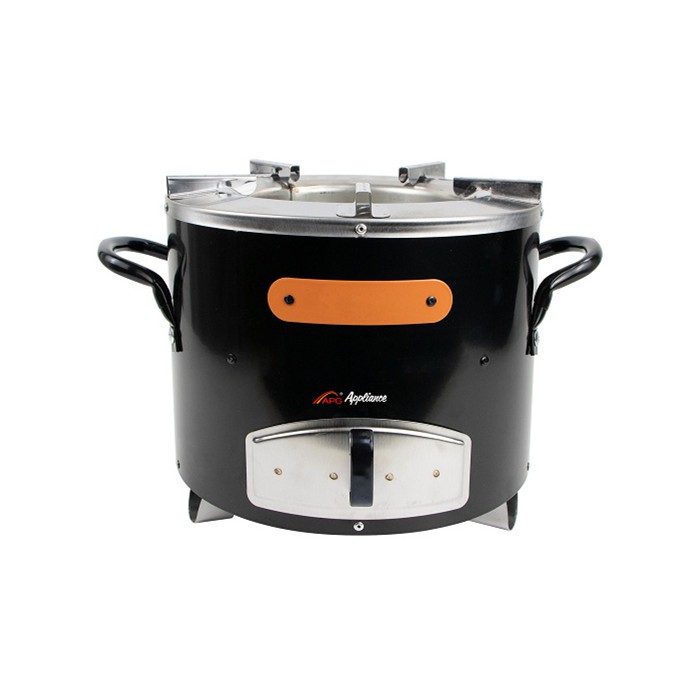
If you're in the market for a wood burning stove, I'd like to introduce you to our Windproof Wood Stove. This stove is a game - changer, especially if you're in an area with windy conditions. The windproof design ensures that the fire burns steadily, and the heat is retained efficiently.
Our windproof wood stove is highly efficient, which means it will use less wood to produce the same amount of heat compared to many other stoves on the market. It's also built to last, with high - quality materials that can withstand the rigors of regular use. Whether you're heating a small cabin or a large home, our windproof wood stove can be a great choice.
Contact Us for Purchasing
If you're interested in learning more about our wood burning stoves or have questions about wood consumption, don't hesitate to reach out. We're here to help you make an informed decision and find the perfect stove for your needs. Whether you're a first - time wood stove user or looking to upgrade your existing stove, we've got the expertise and the products to meet your requirements.
References
- "Wood Stove Efficiency and Performance," U.S. Department of Energy.
- "Heating with Wood," Cooperative Extension Service, various publications.