

If you've ever curled up around a fire pit on a crisp fall night to extend outdoor gatherings, you've probably wondered: Can patio heaters actually keep you comfortable-and safe-during the dead of winter? As a patio heater supplier who's spent the last seven years testing, installing, and troubleshooting heaters for everything from boutique restaurants to suburban backyard patios, I'm here to cut through the myths, share hard-earned lessons, and explain why winter is often patio heaters' best-kept secret.
First, let's address the biggest misconception I hear from new customers: "Patio heaters are for spring and fall-too cold in January." For years, I thought the same thing. Early in my career, I installed a batch of basic umbrella-style heaters at a coastal seafood restaurant in Maine, only to get a frantic call the next week from the owner, who said guests were huddling indoors even on 30°F (–1°C) nights. Turns out, most off-the-shelf heaters sold before 2020 weren't built for sustained winter use. They lacked wind resistance, efficient fuel delivery, and targeted heat distribution to fight frigid gusts and low solar angles that make outdoor spaces feel colder than the actual air temperature.
But here's the thing: Modern patio heaters have evolved dramatically, and when matched to the right space, they can keep patios comfortable at temperatures as low as 10°F (–12°C)-and even lower, if you pair them properly with other prep steps. The key isn't just turning a heater on in January; it's understanding how these devices work, choosing the right type for your space, and setting them up to counteract winter's unique outdoor challenges.
Let's start with the basics of how patio heaters generate and distribute heat, because that's the foundation of their winter performance. Most residential and commercial outdoor heaters fall into two core fuel types: propane (the most common for patios) and natural gas (popular for permanent installations). Propane heaters use liquid propane stored in a tank, which vaporizes when heated to feed the burner; natural gas heaters tap into a fixed line, eliminating refueling hassle. Neither works by warming the air like a furnace-they generate radiant heat, which warms solid objects (chairs, tables, patio furniture, and, most importantly, people) directly, much like the sun. That's why they're so effective outdoors: radiant heat doesn't get swept away by wind the way warm air does. But that same radiant efficiency depends on the heater's design, which is where choosing the right model for winter matters.
Over the years, I've worked with every major style of patio heater, and I've seen firsthand which ones shine in winter and which fall short. Let's break down the four most popular types, with real-world winter use cases from my experience:
First, there's the classic Umbrella Type Patio Heater-the one you picture at a sidewalk café, with a wide, umbrella-shaped top to direct heat downward. These are the most recognizable, and with good reason for winter use, as long as you pick one rated for cold climates. The top shield is a game-changer in winter: it blocks wind from dissipating heat, and it traps a small layer of warm air directly above the heater's burner. Early models had flimsy metal tops that rusted or bent in snow, but modern winter-rated umbrella heaters come with reinforced powder-coated steel tops, sealed propane connections to prevent fuel line freezing, and burners calibrated to run efficiently at low temperatures. A family in Vermont bought two umbrella heaters for their back patio last year; on a 15°F (-9°C) night with 10 mph winds, they hosted 12 people for a dinner party, and everyone stayed comfortable with just a few layers of sweaters. The only catch for umbrella heaters: they work best for small to medium patios, since their heat is focused in a 10- to 15-foot radius. For larger spaces, you'll need more than one.
Next, the Cylindrical Patio Heater-sleeker, taller, and often designed for commercial use. These have a narrow, vertical tube burner and a polished metal or glass exterior that reflects heat outward in a 360-degree pattern. I installed six of these at a ski resort's base lodge patio last winter, and they performed flawlessly even at 5°F (-15°C) with 15 mph wind gusts. Why? Their cylindrical design means wind interacts with the heater evenly, so there's no "cold side" where heat dissipates. The closed outer shell also protects the burner from snow and ice buildup, which can shut off less robust heaters. A big benefit for businesses: cylindrical heaters' 360-degree heat means they don't have to be positioned as close to tables, making them ideal for high-traffic patios where tables are spaced closely. The only downside is their size: they take up more floor space than umbrella models, so they're not ideal for tiny residential balconies.
For something that feels a bit more atmospheric, especially for events or boutique spaces, there's The Crystal Tube Flame Patio Heater. These use a clear, glass tube filled with ceramic crystals that glow when lit, creating a warm, flame-like effect without the open fire of traditional models. I've installed these at a boutique hotel's outdoor cocktail hour space for holiday parties, and they're a hit for winter because they add to the cozy ambiance while delivering solid heat. The key to their winter performance is that their burner is positioned to direct radiant heat outward, and the crystal tube doesn't block heat the way solid glass might. That said, they're best for spaces that are slightly sheltered-wind can blow the heat away from the delicate crystal tube, so they're not ideal for exposed patios or high-wind areas.
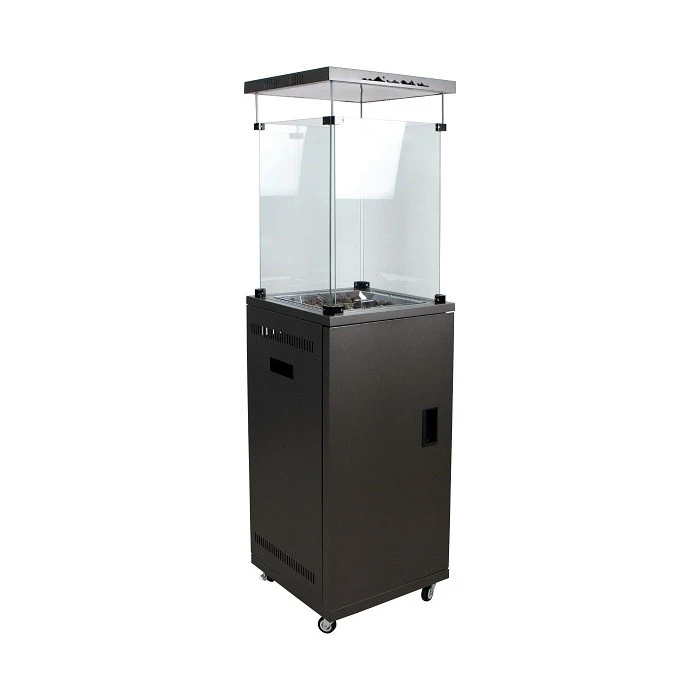
Finally, the Square Glass Heater-a newer, modern design with a rectangular frame and a front glass panel that lets you see the burner. These are popular for contemporary homes and high-end restaurants because of their streamlined look. I tested a residential square glass heater last winter in Chicago, where temperatures regularly dropped into the 20s, and it kept a 12x12 patio comfortable for four people. The glass panel works as a heat reflector, bouncing radiant heat back toward the space instead of letting it escape forward, which is perfect for narrow patios where you don't want heat blowing onto a street or wall. The only note: like cylindrical heaters, their square shape means wind can create a "dead zone" on one side if they're not positioned correctly, so I always recommend anchoring them or placing them against a windbreak like a fence or shrubbery.
Now that you know which heaters work for winter, let's talk about the critical steps to make any patio heater work in cold weather. Over the years, I've seen even the best heaters fail in winter because of simple setup mistakes. First, fuel type: propane heaters perform better in winter if you use a 40-pound tank instead of a small 20-pound tank. Smaller tanks can run out of propane quickly in cold weather because propane vaporizes more slowly when temperatures drop below freezing; larger tanks maintain a steady vapor flow, so the burner doesn't sputter or turn off. If you have a permanent setup, natural gas heaters are even better because they eliminate tank refueling and don't have to deal with vaporization issues.
Second, wind management is non-negotiable in winter. Even a 5-mph wind can cut a patio heater's effective heat range in half. So avoid placing heaters in open, unobstructed areas where wind can blow directly on them. Instead, position them near windbreaks: a row of tall hedges, a wall, or even a string of outdoor curtains. For larger patios, use wind screens around the edges of the space-they don't block heat, but they prevent wind from carrying it away. I also recommend turning on heaters 10 to 15 minutes before guests arrive, so the furniture and floor have time to absorb radiant heat, making the whole space feel warmer faster.
Third, maintenance is key for winter reliability. Before the first frost, clean your heater's burner to remove dust, debris, and spider webs (they love to build nests in burner tubes, and can cause clogs that lead to uneven heat). Check the propane line for leaks-even a small leak can get worse in cold weather, and poses a safety risk. For electric patio heaters (a less common, but growing option), make sure the outlet is weatherproof and free of ice buildup around the plug. I always tell customers: a 10-minute maintenance check before winter saves you a headache (and a cold patio) when you need it most.
Of course, it's not just about comfort-safety is non-negotiable when using patio heaters in winter. I've seen too many near-misses from customers who don't take winter-specific safety steps. First, keep heaters at least 3 feet away from anything flammable: Christmas lights, patio umbrellas stacked against a wall, holiday decorations, even snow piled near the base of the heater. Snow can melt and seep into the heater's base, causing rust or electrical issues. Second, never leave a heater unattended, especially if there are kids or pets around. Modern heaters come with tip-over shutoff valves that turn the heater off if it's knocked over, but they're not foolproof. Third, never use a patio heater indoors-even in a garage or porch. The carbon monoxide emitted by propane and natural gas heaters can build up quickly in enclosed spaces, leading to carbon monoxide poisoning, which is especially dangerous in cold weather when windows are closed.
Now, let's address a common question: How much heat do you actually need for winter? It depends on two factors: the temperature outside and the size of your space. For a 10x10 patio in temperatures around 30°F (-1°C), one 40,000 BTU heater will keep 4 to 6 people comfortable. For a larger 15x20 patio at 15°F (-9°C), you'll need two heaters, rated between 30,000 and 50,000 BTU each. BTU (British Thermal Unit) is a measure of heat output, and higher BTU doesn't always mean better-you don't want a heater so powerful that it makes the space too hot, wasting energy. My rule of thumb: multiply the square footage of your patio by 20 to 25 BTU to get your total needed heat output, then split that between heaters for even coverage.

I'll leave you with a story from last January that sums up why winter patio heaters work so well. A customer in Minneapolis, a small brewery that has a 50-person patio, reached out to me in late December, saying they'd lost $2,000 in a weekend when they had to close the patio because it was too cold. They'd tried three basic umbrella heaters that barely kept the patio above 40°F. I helped them replace them with two cylindrical heaters (for 360-degree coverage) and one square glass heater for the edge of the patio. We added wind screens along the patio's back edge, and I taught their staff to turn on the heaters 20 minutes before service. By mid-January, they were turning away customers for patio tables on cold Saturday nights, even when temperatures dropped to 10°F (-12°C). That's the power of matching the right heater to the right space, and using winter-specific best practices.
If you're ready to extend your outdoor space into winter, we can help you choose the perfect patio heater for your needs-whether it's for a small residential backyard, a commercial patio, or a holiday event. Reach out to our team to discuss your space, temperature requirements, and budget, and we'll guide you through the process of selecting, installing, and maintaining your heater for reliable winter performance.
References:
- American National Standards Institute (ANSI). (2022). Outdoor Patio Heater Safety Standards for Cold Weather Operation.
- Propane Education & Research Council (PERC). (2023). Winter Performance of Patio Heaters: Fuel Efficiency and Vaporization.
- International Association of Plumbing and Mechanical Officials (IAPMO). (2022). Commercial Patio Heater Installation Guidelines for Low-Temperature Environments.
- U.S. Environmental Protection Agency (EPA). (2023). Reducing Emissions and Improving Efficiency of Outdoor Gas Appliances.