

Hey there! As a supplier of kerosene heaters, I've gotten a ton of questions about the differences between portable and stationary kerosene heaters. So, I thought I'd break it down for you in this blog post.
Portability and Placement
Let's start with the most obvious difference - portability. Portable kerosene heaters are, well, portable! They're designed to be moved around easily. You can take them from one room to another as you need. Say you're working in your home office during the day, and you can roll your portable heater right in there to keep you warm. Then, when it's time to relax in the living room in the evening, you can just move it over. They're great for small spaces or when you need heat in different areas at different times.
On the other hand, stationary kerosene heaters are meant to stay put. They're usually bigger and heavier, and they're often installed in a specific location in a room. If you have a large living area or a workshop, a stationary heater can be a great choice. It can provide consistent heat over a large area without having to be moved around.
Power and Heating Capacity
In terms of power and heating capacity, there can be a significant difference between the two types. Portable heaters come in a range of sizes and power outputs, but generally, they're smaller and have a lower heating capacity compared to stationary ones. A 2500W Portable Kerosene Heater can heat a small to medium-sized room effectively. It's perfect for a bedroom, a small office, or a cozy nook.
Stationary heaters, however, are often more powerful. They're built to heat larger spaces, like big living rooms, warehouses, or industrial workshops. A Large Kerosene Heater can have a much higher BTU (British Thermal Unit) rating, which means it can produce more heat and warm up a much larger area in a shorter amount of time.
Fuel Consumption and Refueling
Fuel consumption is another important factor. Portable heaters tend to use less fuel because they have a smaller heating capacity. They usually have smaller fuel tanks, so you may need to refuel them more often, but the amount of fuel used per hour is relatively low. This can be a plus if you're on a tight budget or if you don't want to deal with large amounts of fuel at once.
Stationary heaters, due to their higher power, consume more fuel. But they often come with larger fuel tanks, which means you don't have to refuel them as frequently. However, when you do need to refuel, you'll be dealing with a larger quantity of kerosene.
Safety Features
Safety is a top priority when it comes to any type of heater, and both portable and stationary kerosene heaters have safety features. Portable heaters often come with features like tip-over switches. If the heater gets knocked over, it will automatically turn off, preventing any potential fires or accidents. They may also have cool-touch exteriors, so you don't accidentally burn yourself if you brush against the heater.

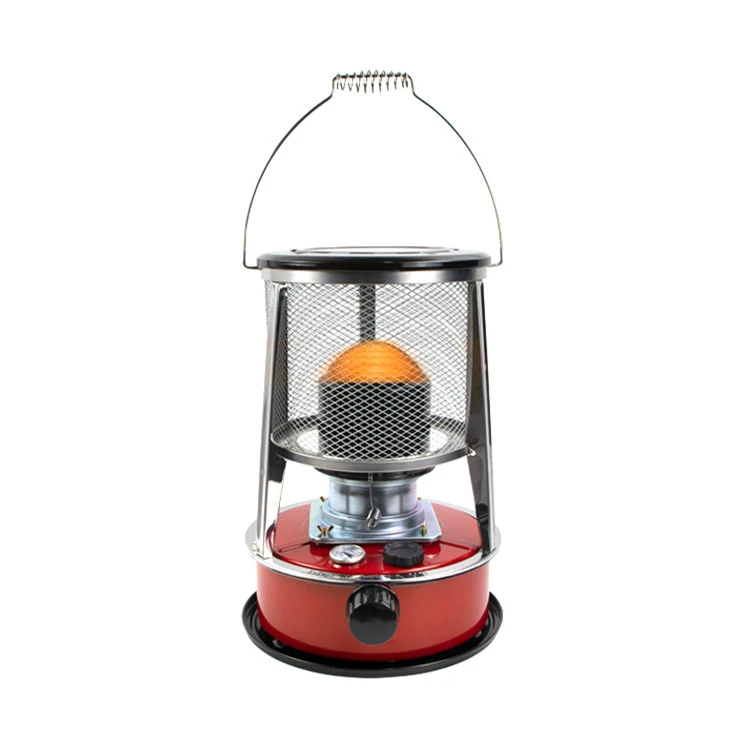
Stationary heaters also have safety features, but they may be more focused on long-term operation. For example, they may have sensors that detect if there's a problem with the fuel supply or if the heater is overheating. Some Intelligent Remote Control Kerosene Heater models even allow you to control the heater from a distance, which can be a great safety feature as you don't have to get too close to the heater when you want to adjust the settings.
Maintenance
Maintenance requirements also differ between the two types. Portable heaters are generally easier to maintain. You can easily clean the exterior and check the fuel tank. The wick, which is an important part of a kerosene heater, is usually easier to access and replace in a portable model.
Stationary heaters, because of their larger size and more complex installation, may require more maintenance. You may need to have a professional come in to check the ventilation system, the fuel lines, and other components. However, if you keep up with regular maintenance, a stationary heater can last for a long time and provide reliable heat.
Cost
Cost is always a consideration. Portable kerosene heaters are usually more affordable upfront. They're a great option if you're on a budget or if you only need a heater for a short period or a small space.
Stationary heaters, on the other hand, are more expensive. The cost includes not only the heater itself but also the installation. However, if you need to heat a large area for a long time, the long-term cost may be more reasonable as they're more energy-efficient for large spaces.
Which One Should You Choose?
The choice between a portable and a stationary kerosene heater depends on your specific needs. If you need a heater that you can move around easily, a portable one is the way to go. If you have a large area that needs consistent heating, a stationary heater would be a better option.
So, if you're in the market for a kerosene heater, whether it's a portable or a stationary one, I'd love to help you find the perfect fit for your needs. Just get in touch with me, and we can start a conversation about your requirements. Let's work together to make sure you stay warm and comfortable this season!
References
- General knowledge from years of experience in the kerosene heater industry.
- Product specifications and research on different models of portable and stationary kerosene heaters.